How to Build a Model: The SMART Way
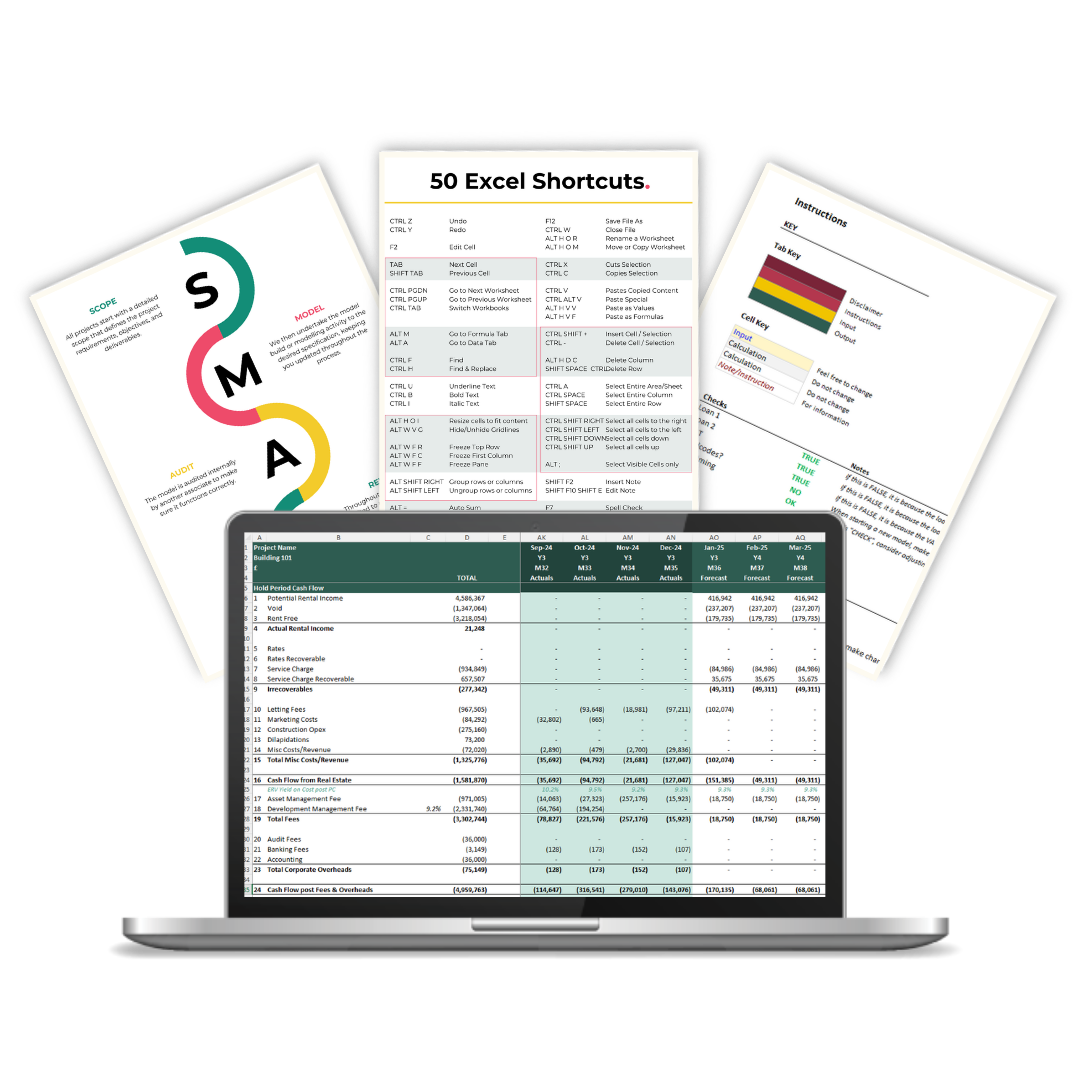
Learn how to build robust, transparent, and professional real estate financial models using the SMART framework - Scope, Model, Audit, Review, and Transition. Improve model structure, reduce errors, and create repeatable Excel models suitable for commercial real estate analysis and investment decision-making.
DIFFICULTY LEVEL: Advanced
CPD HOURS: 5.0
How to Build a Model: The SMART Way
Learn how to build robust, transparent, and professional real estate financial models using the SMART framework - Scope, Model, Audit, Review, and Transition. Improve model structure, reduce errors, and create repeatable Excel models suitable for commercial real estate analysis and investment decision-making.
DIFFICULTY LEVEL: Advanced
CPD HOURS: 5.0
Course Overview
Building a financial model is one thing. Building a model that is clear, scalable, reviewable, and trusted by investors, lenders, and stakeholders is another.
This course teaches you how to approach real estate financial modelling professionally using the SMART Modelling Framework - Scope, Model, Audit, Review, and Transition. Designed around real-world commercial real estate workflows, the course focuses on the practical modelling skills and processes that separate strong analysts from average ones.
You’ll learn how to scope a model before building, structure spreadsheets for flexibility and clarity, implement robust checks and audit procedures, and prepare models for review and handover. The course also explores practical modelling techniques used across investment, development, debt, and cash flow analysis.
Using real estate examples and case studies throughout, you’ll develop the ability to build financial models that are not only technically correct, but also easy to understand, review, and maintain.
This course is particularly valuable for analysts, modellers, and real estate professionals who want to improve the quality, professionalism, and reliability of their Excel models.
What you will learn
By the end of this course, you’ll be able to:
Explain the SMART Modelling Framework and how it applies to real estate financial modelling
Scope a financial model effectively before building to improve clarity and reduce rework
Structure Excel models using best practices for readability, flexibility, and scalability
Separate inputs, calculations, and outputs clearly within a model
Apply professional model auditing and error-checking techniques
Create model checks and validation processes to improve reliability
Prepare models for internal review, investment committees, and stakeholder presentation
Improve version control, documentation, and model presentation standards
Build cleaner monthly, quarterly, and annual cash flow structures
Model common commercial real estate cash flow items including capex, acquisitions, disposals, debt, VAT, and working capital
Understand how to transition and hand over models so they can be used confidently by others
Apply modelling best practices used across commercial real estate investment and development analysis
Who this course is for
This course is designed for real estate professionals who want to improve the quality, structure, and professionalism of their financial models.
It is particularly valuable for:
Real estate analysts and financial modellers
Investment and acquisitions professionals
Development analysts and development managers
Surveyors and valuation professionals working with cash flow models
Professionals preparing for modelling tests and technical interviews
Anyone building or reviewing commercial real estate Excel models regularly
A working knowledge of Excel and basic financial modelling concepts is recommended - these can be learnt from other EiP Academy courses.
Ready to build better financial models?
Join the EiP Academy to access this course alongside the full library of real estate financial modelling training, live support sessions, downloadable tools, and practical commercial real estate case studies.
FAQs
What is the SMART Modelling Framework?
The SMART Modelling Framework stands for Scope, Model, Audit, Review, and Transition. It provides a structured approach to building professional real estate financial models that are transparent, scalable, and easy to review.
Is this course focused on Excel modelling best practices?
Yes. The course focuses heavily on financial modelling best practices, including model structure, formatting, error checking, cash flow setup, auditing, and documentation.
Will I learn real estate cash flow modelling?
Yes. The course includes practical examples covering investment and development cash flows, acquisitions, disposals, debt financing, capex profiling, VAT, and working capital modelling.
Is this suitable for real estate analysts?
Yes. This course is designed specifically for analysts and professionals working in commercial real estate financial modelling, investment analysis, and development appraisal.
Do you cover model auditing and review techniques?
Yes. A major focus of the course is learning how to audit models, create checks, identify common modelling mistakes, and prepare models for professional review and handover.
Is this suitable for beginners?
This course is best suited to professionals with a basic understanding of Excel and financial modelling who want to improve their modelling processes and technical standards.

FOLLOW US


COMPANY
CUSTOMER CARE
LEGAL
Copyright © 2026. EiP. All Rights Reserved.